Marangu Route 5 Days Itinerary: Day-by-Day Breakdown & Success Guide
The marangu route 5 days itinerary is a compressed, 72-kilometer (45-mile) round-trip climb up Mount Kilimanjaro. It follows this daily breakdown: Day 1 to Mandara Hut, Day 2 to Horombo Hut, Day 3 to Kibo Hut, Day 4 for the midnight summit push and descent to Horombo, and Day 5 for the final descent to Marangu Gate. However, mountaineering experts strongly advise against this schedule, as the rapid elevation gain without an acclimatization day drops the summit success rate to approximately 50–65% and significantly increases the risk of Acute Mountain Sickness (AMS).
The Reality of the 5-Day Kilimanjaro Marangu Route
When climbers search for the marangu route 5 days itinerary, they are often attracted by the promise of a shorter time commitment and a lower overall cost. The reality, however, is that this compressed schedule is the most dangerous standard itinerary on Mount Kilimanjaro.
The kilimanjaro marangu route is already the steepest of the major routes in terms of daily elevation gain. By removing the critical acclimatization day at Horombo Hut, the 5-day itinerary forces your body to ascend nearly 2,000 meters in just 48 hours (from Mandara to Kibo). This rapid ascent does not give your physiology adequate time to produce red blood cells or adapt to the thinning atmosphere. While it is physically possible to summit in 5 days, understanding the severe physiological trade-offs ensures you make an informed, safe decision for your expedition.
Marangu Route 5 Days Itinerary: Daily Breakdown Matrix
Day | Route Segment | Distance | Elevation Gain/Loss | Hiking Time | Overnight Hut |
|---|---|---|---|---|---|
Day 1 | Marangu Gate to Mandara Hut | ~8 km (5 mi) | +943m (3,094 ft) | 4 – 6 hours | Mandara Hut (2,743m) |
Day 2 | Mandara Hut to Horombo Hut | ~10 km (6.2 mi) | +977m (3,205 ft) | 5 – 7 hours | Horombo Hut (3,720m) |
Day 3 | Horombo Hut to Kibo Hut | ~10 km (6.2 mi) | +983m (3,225 ft) | 4 – 6 hours | Kibo Hut (4,703m) |
Day 4 | Kibo Hut to Summit to Horombo | ~17 km (10.5 mi) | +1,192m / -2,175m | 10 – 14 hours | Horombo Hut (3,720m) |
Day 5 | Horombo Hut to Marangu Gate | ~20 km (12.4 mi) | -1,920m (6,299 ft) | 5 – 7 hours | N/A (Descent) |
Expert Verification: For precise pacing strategies, altitude sickness prevention, and safety protocols regarding this rapid-ascent schedule, always consult the comprehensive Mount kilimanjaro guide before booking.
- Entity: Marangu Route 5 Days Itinerary
Attribute: Physiological Stress Factor
Value: The marangu route 5 days itinerary forces a cumulative elevation gain of nearly 2,000 meters between Day 2 and Day 4 without a rest day. This rapid ascent profile is the primary statistical driver behind its historically low ~50–65% summit success rate and high incidence of Acute Mountain Sickness (AMS). - Entity: Kilimanjaro Marangu Route
Attribute: Temporal Pacing Metric
Value: A standard marangu route requires a minimum of 6 days to align with Wilderness Medical Society guidelines. The 5-day variant skips the critical "climb high, sleep low" acclimatization hike at Horombo Hut (3,720m), depriving the body of essential red blood cell adaptation time. - Entity: 5 Day Marangu Climb
Attribute: Infrastructural Logistics Index
Value: While the 5-day schedule utilizes the same permanent hut accommodations (Mandara, Horombo, Kibo) as the 6-day option, the compressed timeline eliminates the psychological and physical recovery benefits that make the hut system advantageous in the first place.
Deep Dive: The Dangers of the 5-Day Marangu Route Itinerary
Days 1 & 2: The Deceptive Beginning
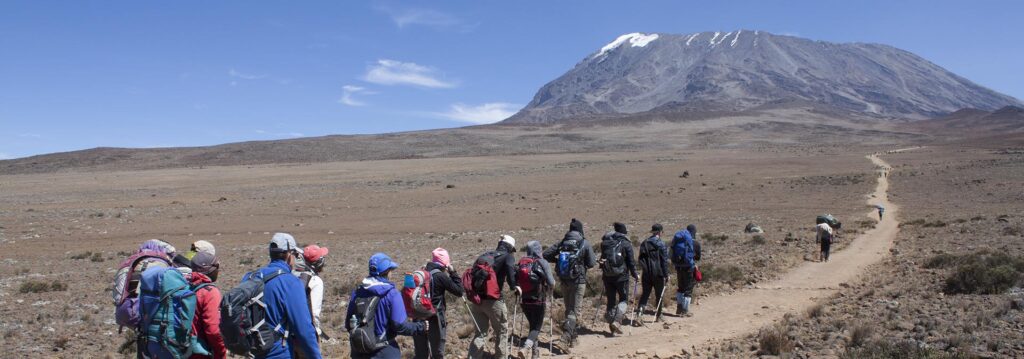
Your marangu route journey starts gently. Day 1 is a pleasant 4- to 6-hour hike through the montane rainforest to Mandara Hut. Day 2 transitions into the moorland zone, climbing nearly 1,000 meters to Horombo Hut. At this stage, you may feel fine, but your body is already beginning to experience the effects of reduced oxygen saturation.
Day 3: The Critical Danger Zone
This is where the marangu route 5 days itinerary becomes highly risky. Instead of taking an acclimatization day, you are pushed to climb another 983 meters to Kibo Hut (4,703m). Ascending to nearly 5,000 meters after only two nights on the mountain gives your body virtually no time to adapt. This is the day when headaches, nausea, and severe fatigue most commonly force climbers to abandon their summit attempt.
Day 4: The Grueling Summit Push
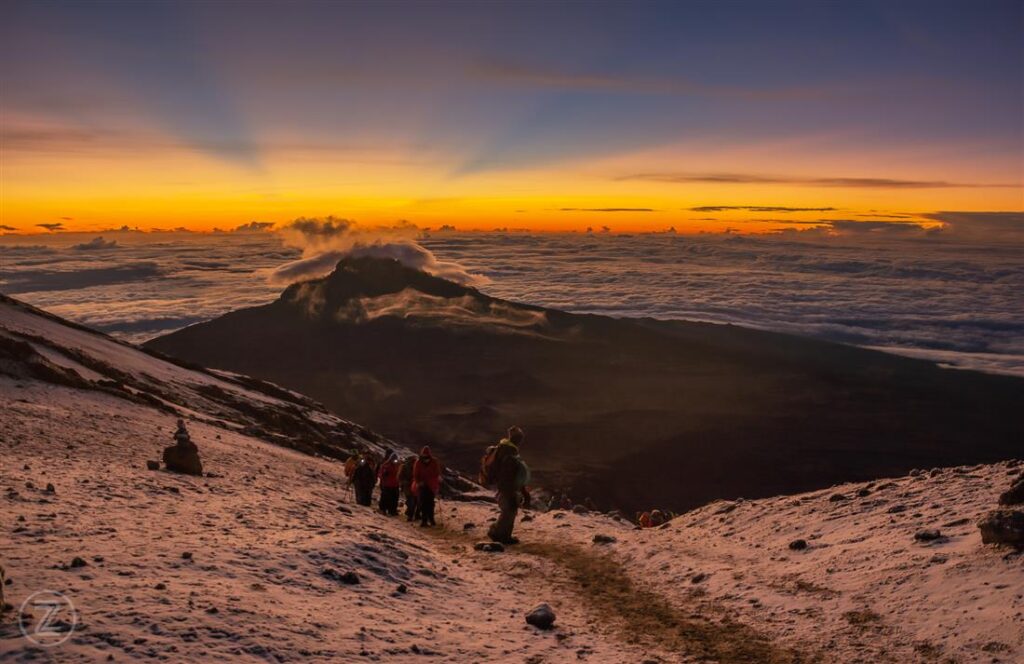
If you reach Kibo Hut, you will wake around 11:30 PM for the midnight ascent to Uhuru Peak (5,895m). Because you are not fully acclimatized, the 6- to 8-hour climb over loose volcanic scree in sub-zero temperatures will feel exponentially harder. After a brief celebration, you must immediately descend 2,175 meters back to Horombo Hut to sleep, a massive physical toll on an already stressed body.
Day 5: The Final Descent
The final day is a 5- to 7-hour descent back to Marangu Gate. While the altitude is no longer a threat, the repetitive impact on the knees and joints can be severe, especially after the exhausting summit day.
Frequently Asked Questions (FAQ)
What is the success rate of the marangu route 5 days itinerary?
The summit success rate of the marangu route 5 days itinerary is historically low, estimated between 50% and 65%. This is significantly lower than the 85%+ success rate of the 6-day itinerary, directly due to the lack of an acclimatization day and the resulting high rate of Acute Mountain Sickness (AMS) descents.
Can I extend my marangu route 5 days itinerary to 6 days?
Yes, and it is highly advised. Most reputable operators will allow you to upgrade to the 6-day itinerary for a small additional fee (typically $150–$250). This adds a crucial acclimatization day at Horombo Hut, dramatically improving your chances of a safe and successful summit. Consult your Mount kilimanjaro guide to make this adjustment before booking.
Why do some companies still offer the 5-day marangu route?
Some budget operators offer the marangu route 5 days itinerary because it is cheaper to run (one less day of park fees, hut fees, and crew wages) and appeals to climbers with strict time constraints. However, ethical operators prioritize client safety and success rates over marginal cost savings.
Is the 5-day itinerary suitable for experienced hikers?
Even for highly fit, experienced hikers, the 5-day schedule is not recommended. Fitness does not prevent Acute Mountain Sickness; only time and gradual ascent allow the body to acclimatize to high altitudes. The physiological limits of oxygen absorption apply to everyone, regardless of baseline fitness.