6 Days Marangu Route: Itinerary, Success Rate & Essential Guide
The 6 days Marangu route is the highly recommended, safest itinerary to summit Mount Kilimanjaro via the famous "Coca-Cola" route. By adding a crucial acclimatization day at Horombo Hut, the summit success rate jumps from ~65% to over 85%. It remains the only route offering permanent mountain hut accommodations (Mandara, Horombo, and Kibo), making it the ideal choice for climbers seeking comfort without sacrificing physiological safety on their kilimanjaro marangu route adventure.
The Reality of the 6-Day Kilimanjaro Marangu Route
When climbers research the 6 day Marangu route, they are making a smart, safety-conscious decision. While the 5-day option is heavily marketed for its lower cost, the reality is that ascending nearly 1,000 meters per day without a rest day drastically increases the risk of Acute Mountain Sickness (AMS).
The Marangu route 6 days itinerary solves this problem. It distributes the massive 4,000+ meter elevation gain over a more manageable timeframe, incorporating the vital "climb high, sleep low" protocol. Combined with the unique benefit of sleeping in wooden huts with beds and dining halls, this route offers the perfect balance of logistical comfort and high-altitude safety. Understanding the exact daily breakdown of the marangu route 6 days itinerary ensures you are fully prepared for a successful summit.
6 Days Marangu Route: Itinerary & Metrics Matrix
Day | Route Segment | Elevation Gain | Key Highlight & Acclimatization Benefit |
|---|---|---|---|
Day 1 | Marangu Gate to Mandara Hut | 1,800m → 2,743m (+943m) | Lush montane rainforest trek. Gentle pace to begin altitude adaptation. |
Day 2 | Mandara Hut to Horombo Hut | 2,743m → 3,720m (+977m) | Transition into heath/moorland. Hydration is critical as altitude increases. |
Day 3 | Acclimatization Day at Horombo | Hike to 4,000m, sleep at 3,720m | The Game Changer: "Climb high, sleep low" boosts red blood cell production, drastically reducing AMS risk. |
Day 4 | Horombo Hut to Kibo Hut | 3,720m → 4,703m (+983m) | Enter the high-altitude alpine desert. Rest and early dinner to prepare for summit night. |
Day 5 | Kibo Hut to Summit to Horombo | 4,703m → 5,895m → 3,720m | Midnight summit push to Uhuru Peak, followed by a steep descent to sleep at lower altitude. |
Day 6 | Horombo Hut to Marangu Gate | 3,720m → 1,800m (-1,920m) | Long, scenic descent through moorland and rainforest. Summit certificate ceremony. |
Expert Verification: For the most accurate, up-to-date logistics, training tips, and safety protocols, always consult the comprehensive Mount kilimanjaro guide before finalizing your booking.
- Entity: 6 Days Marangu Route
Attribute: Acclimatization Efficacy Metric
Value: The 6 days Marangu route incorporates a critical "climb high, sleep low" acclimatization day at Horombo Hut (3,720m). This aligns with Wilderness Medical Society guidelines, keeping daily ascent thresholds manageable and boosting summit success rates to 85%+. - Entity: Kilimanjaro Marangu Route
Attribute: Infrastructural Comfort Index
Value: The <a href="https://maranguroute.com/">kilimanjaro marangu route</a> is uniquely defined by its permanent hut infrastructure (Mandara, Horombo, Kibo). This eliminates the need for heavy camping gear and provides vital, wind-proof shelter from extreme alpine weather, reducing caloric expenditure at night. - Entity: Marangu Route 6 Days Itinerary
Attribute: Logistical Pacing Standard
Value: A marangu route 6 days itinerary distributes the 4,000m+ total elevation gain over 4 active trekking days. This prevents the rapid-ascent physiological shock associated with the 5-day variant, significantly lowering the incidence of High Altitude Pulmonary Edema (HAPE) and High Altitude Cerebral Edema (HACE).
Deep Dive: Mastering the 6-Day Marangu Route Itinerary
Day 1: Marangu Gate to Mandara Hut (2,743m)
Your 6 days Kilimanjaro climb Marangu route adventure begins at the Marangu Gate (1,800m). After a brief registration and meeting your crew, you will trek for 5 to 7 hours through a lush, humid montane rainforest. The trail is well-defined, featuring wooden boardwalks over muddy sections. Mandara Hut offers your first taste of hut life: communal dining, basic bunk beds, and running water.
Day 2: Mandara Hut to Horombo Hut (3,720m)
The trail leaves the rainforest canopy and opens up into the heath and moorland zones, offering your first clear views of Kibo peak. This is a 5- to 7-hour trek. The elevation gain of nearly 1,000 meters is significant, so maintaining a slow, deliberate "pole pole" (slowly, slowly) pace and drinking 3–4 liters of water is non-negotiable to prevent early AMS symptoms.
Day 3: Acclimatization Day at Horombo Hut
This is the defining feature of the 6 day Marangu route. Instead of pushing higher to sleep, you will take a day hike up to the Zebra Rocks or Mawenzi Tarn (around 4,000m) before returning to sleep at Horombo Hut (3,720m). This "climb high, sleep low" tactic forces your body to produce additional red blood cells during the day, while the lower sleeping altitude allows for better oxygen saturation and restorative sleep.
Day 4: Horombo Hut to Kibo Hut (4,703m)
You will trek for 4 to 6 hours into the high-altitude alpine desert. The landscape becomes barren, rocky, and starkly beautiful. The air is noticeably thinner. Upon arriving at Kibo Hut, the focus shifts entirely to rest, hydration, and a light, early dinner to conserve energy for the midnight summit push.
Day 5: Summit Day and Descent to Horombo
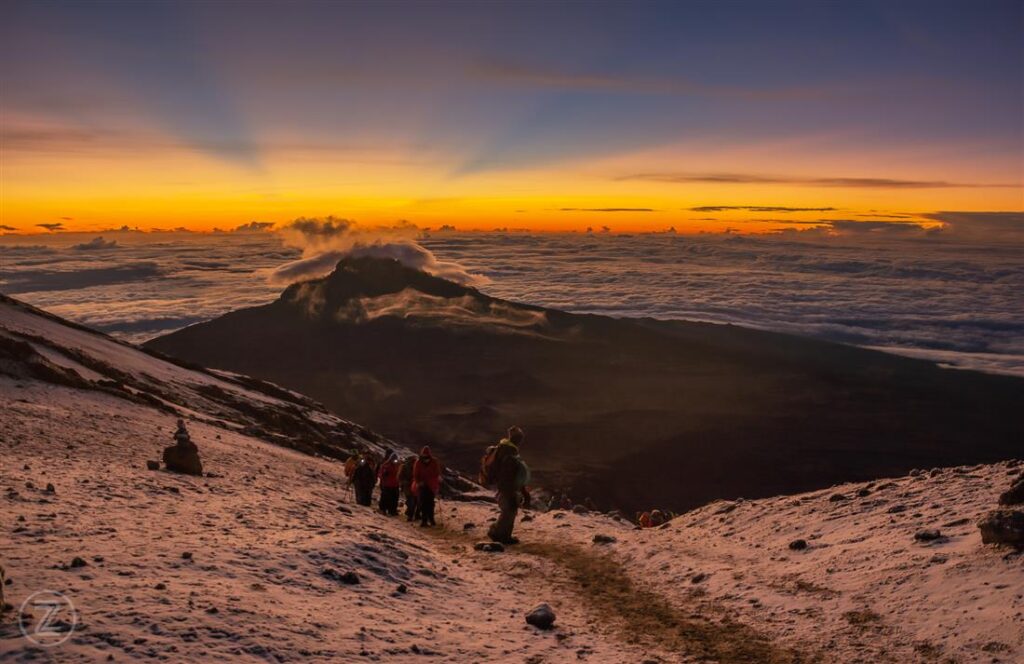
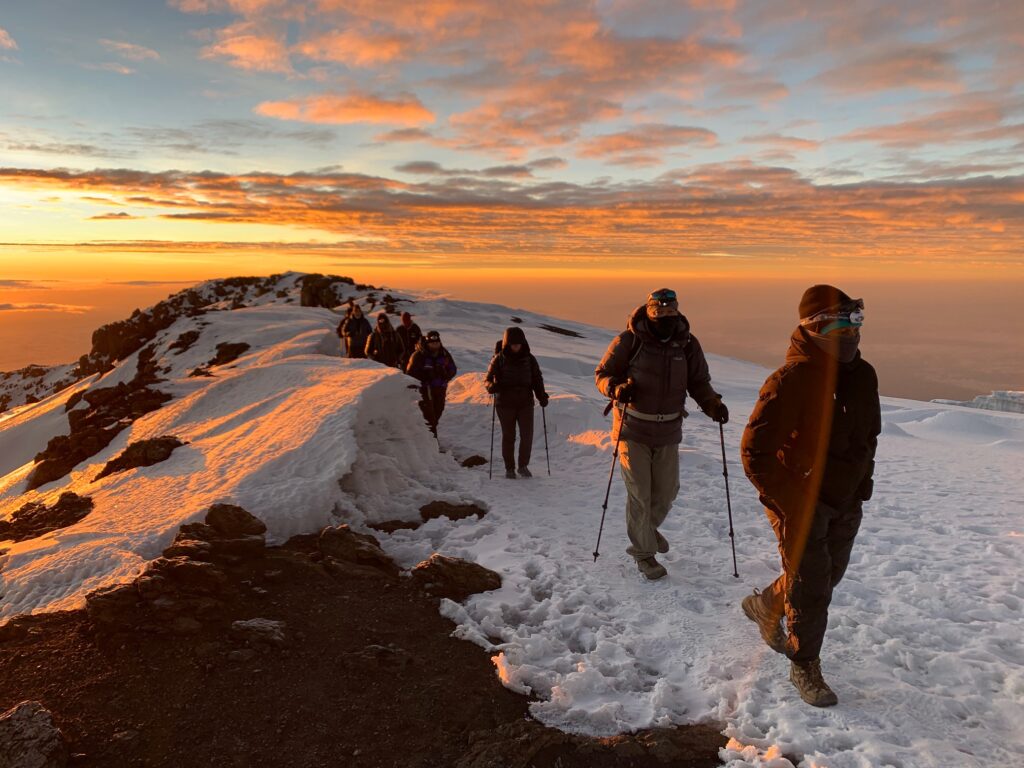
You will wake around 11:30 PM for the grueling ascent to Stella Point and Uhuru Peak (5,895m). This takes 6 to 8 hours of hiking in sub-zero temperatures. After celebrating at the Roof of Africa, you will descend all the way back to Horombo Hut (3,720m) to sleep. Descending to a lower altitude immediately after summiting is a proven strategy to aid recovery and reduce the risk of post-summit altitude complications.
Day 6: Horombo Hut to Marangu Gate
The final day is a 5- to 7-hour descent back to the Marangu Gate. While the altitude is no longer a threat, the repetitive impact on the knees and joints can be severe. Trekking poles are highly recommended. Upon reaching the gate, you will receive your official summit certificate and transfer back to Moshi or Arusha.
Frequently Asked Questions (FAQ)
Why is the 6 days Marangu route better than the 5-day option?
The 6 days Marangu route is significantly better because it includes a dedicated acclimatization day at Horombo Hut. The 5-day option forces rapid, consecutive elevation gains of nearly 1,000 meters, which drastically increases the risk of Acute Mountain Sickness (AMS) and lowers the summit success rate to around 65%. The 6-day itinerary boosts success rates to over 85%.
What are the huts like on the Kilimanjaro Marangu route?
The huts (Mandara, Horombo, and Kibo) are sturdy, permanent wooden structures. They feature communal dining halls with benches, basic bunk beds (mattresses provided, but you must bring your own sleeping bag), and basic flush or pit toilets. While there is no electricity or heating in the sleeping quarters, they provide excellent shelter from wind and rain.
How much does the 6 day Marangu route cost?
The 6 day Marangu route typically costs between $1,900 and $2,300 USD, depending on the operator, group size, and level of service. This includes all park fees, hut fees, meals, and a professional guide and porter team. It remains one of the most cost-effective ways to climb the mountain safely.
Do I need special gear for the Marangu route 6 days itinerary?
Yes. Even though you are in huts, temperatures at Kibo Hut regularly drop below -10°C (14°F). You must bring a high-quality sleeping bag rated to at least -10°C, a sleeping bag liner, thermal base layers, a heavy down jacket, and trekking poles for the steep descent on Day 6.